Luke 16-21
Paul in Athens
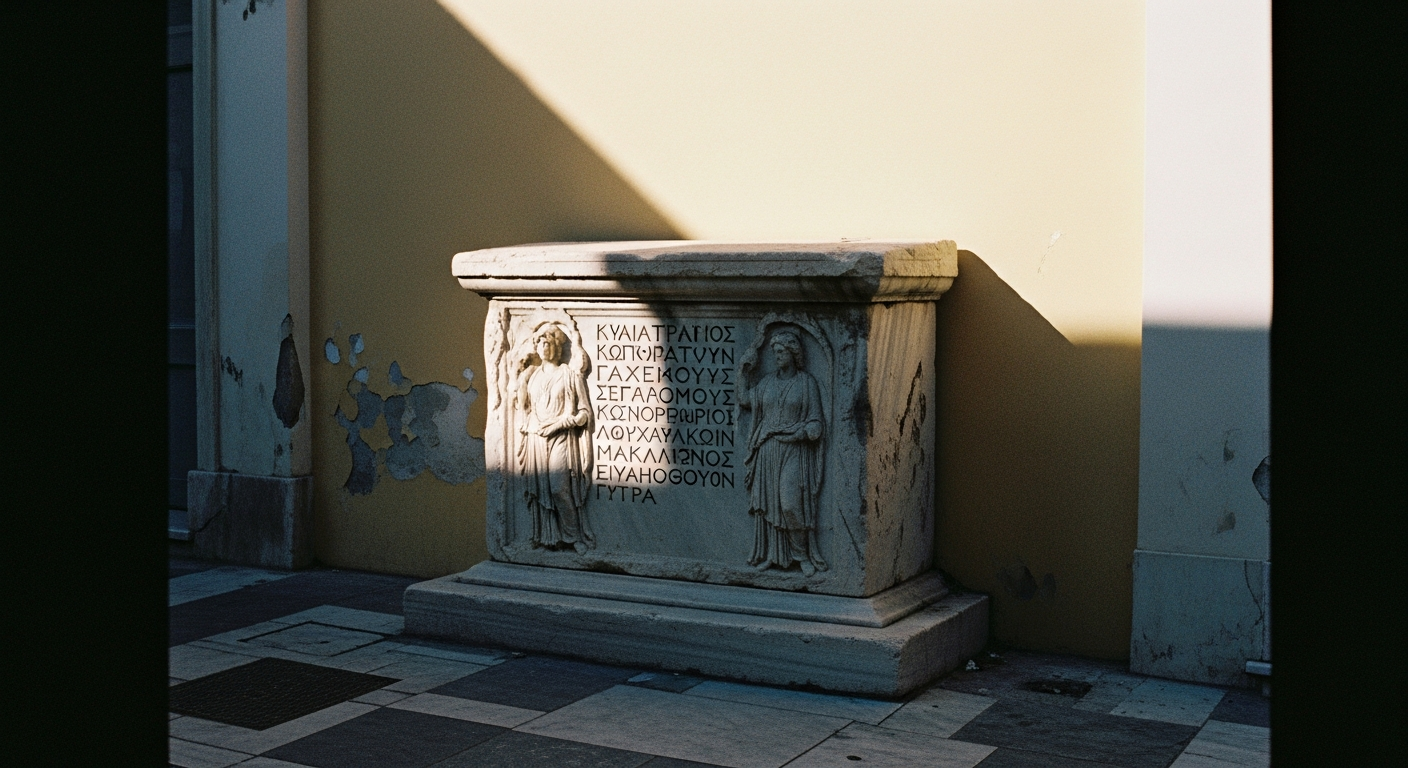
Paul waited for them in Athens. Silas and Timothy hadn't caught up yet, so he had time to walk the city, the city that stood, like no other, for learning and philosophy. And what he saw gave him no peace. The place was full of idols, an altar at every corner, a god in every doorway, sacred stones wedged between the houses. The longer he looked, the less he could hold still.
So he set to work. He argued in the synagogue, with Jews and with the Greeks who worshiped the God of Israel, and every day in the marketplace, with whoever happened to be there. Never a lecture. Always an argument.
Before long the philosophers took him on: followers of Epicurus, and StoicsCulturefollowers of Epicurus, and StoicsTwo living schools of thought, not museum pieces. The Epicureans sought an unshakable calm: the world is made of atoms, the gods take no interest in us, and after death there is nothing — so live moderately, without fear. The Stoics sought virtue by aligning the self with the reason that runs through the whole cosmos. A Stoic could make something of talk about a God who is near. Neither school could do anything with the resurrection of the dead: for the one, the body is atom-dust; for the other, a prison the soul is glad to be free of.. Some sneered: "What is this seed-picker trying to tell us?"A bird hopping the market for crumbs, a scavenger of other people's scraps. Others said, "He seems to be proclaiming foreign gods." They said it because he kept talking about Jesus, and about resurrection.
So they took him up to the AreopagusCulturethe AreopagusThe Areopagus was two things at once: a rocky hill below the Acropolis, and the council that met there. Once a court for cases of bloodshed, by Paul's day it watched over public order — including the question of which new gods and foreign cults the city would admit. Paul is not on a stage for free speech; he is in something closer to a hearing. There is an irony ancient listeners caught at once: the founding charter of this very court ruled a resurrection of the dead explicitly out — blood once spilled stays spilled. That is precisely where Paul will end., the council that had always decided which new gods, which foreign cults, would be given a home in Athens. "May we know," they asked him, "what this new teaching of yours actually is? What you're telling us sounds strange to our ears, and we'd like to know what it means." For the Athenians, and the foreigners who had settled among them, loved nothing so much as the latest thing: telling it, or hearing it.