Luke 7-13
Preparing the Passover
The day of Unleavened Bread arrived — the day the Passover lamb had to be sacrificedCulturethe Passover lamb had to be sacrificedOn the afternoon of Nisan 14, worshipers brought their Passover lambs to the Temple. The lambs were ritually slaughtered by the worshipers themselves, their blood collected by the priests and dashed against the altar. The carcass was then carried home to be roasted for the evening meal. The word "had to" (ἔδει) expresses divine necessity — a key Lukan term for events within God's plan.. Jesus sent Peter and John. "Go," he said. "Prepare the Passover for us to eat."
They said, "Where?"
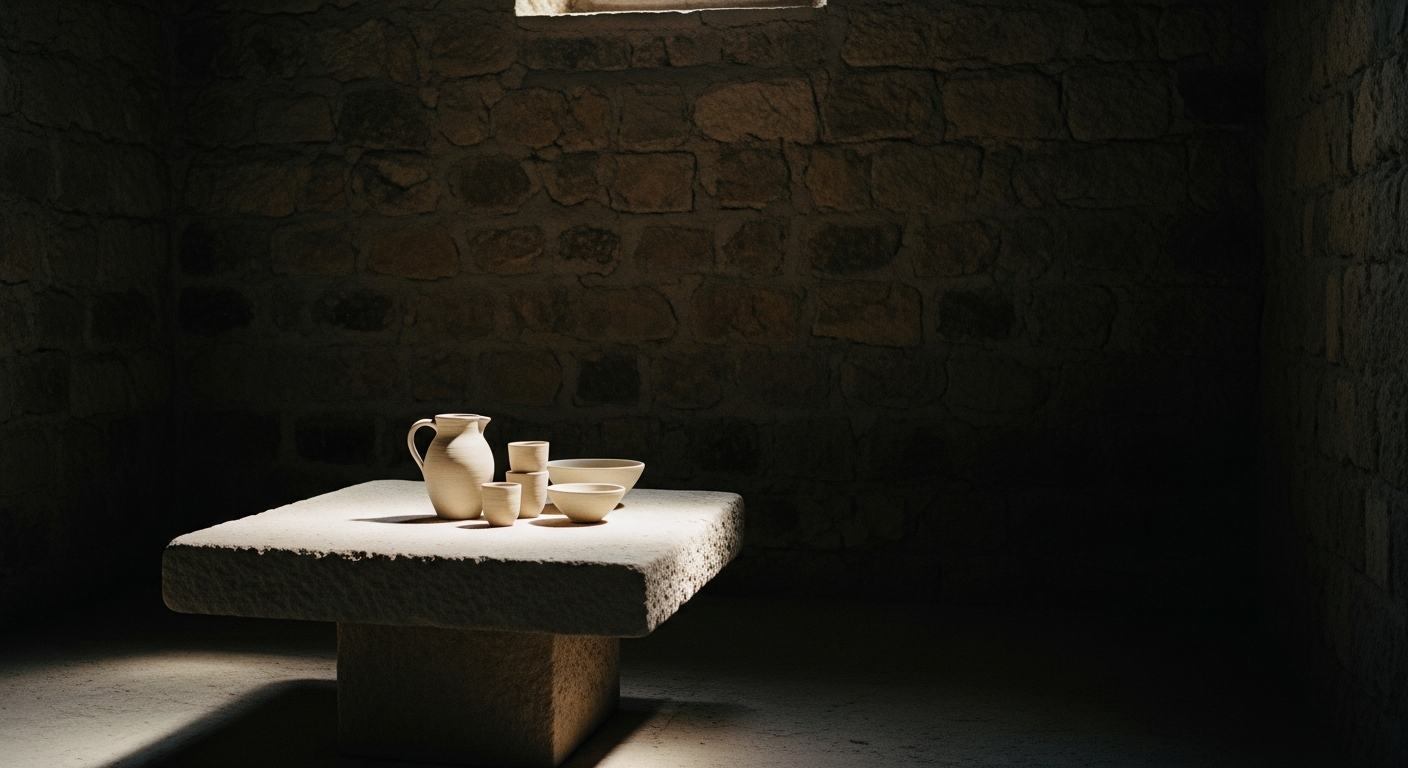
He said: "When you enter the city, you will meet a man carrying a jar of waterCulturea man carrying a jar of waterWater-carrying was typically women's work. A man carrying a water jar would have been conspicuous — easy to spot in a crowd. The detail has the logic of a prearranged signal: Jesus had arranged the meeting place in advance, giving Peter and John a visual marker. The elaborate secrecy may indicate that Jesus kept the location from most of the disciples, possibly to prevent Judas — who was already conspiring with the authorities — from revealing it.. Follow him into the house he enters, and say to the owner: 'The Teacher says to you — where is the guest roomTextguest roomThe Greek κατάλυμα means a guest room in a private house, not a commercial inn. The same word appears in Luke 2:7 for the room where there was "no place" for the infant Jesus. The owner's immediate cooperation suggests a prior arrangement. where I can eat the Passover with my disciples?' He will show you a large upper room, furnishedCulturea large upper room, furnishedAn ἀνάγαιον — a formal upper-storey dining room furnished with couches for reclining. At Passover, participants reclined on their left elbow in the posture of free people. Slaves served standing; reclining was a statement of liberation. The image most English speakers carry — Leonardo da Vinci's painting of upright figures at a long table — reflects Renaissance dining customs, not first-century practice. and ready. Make the preparations there."
They went. Everything was exactly as he had said. They prepared the Passover.