Luke 39-46
Gethsemane
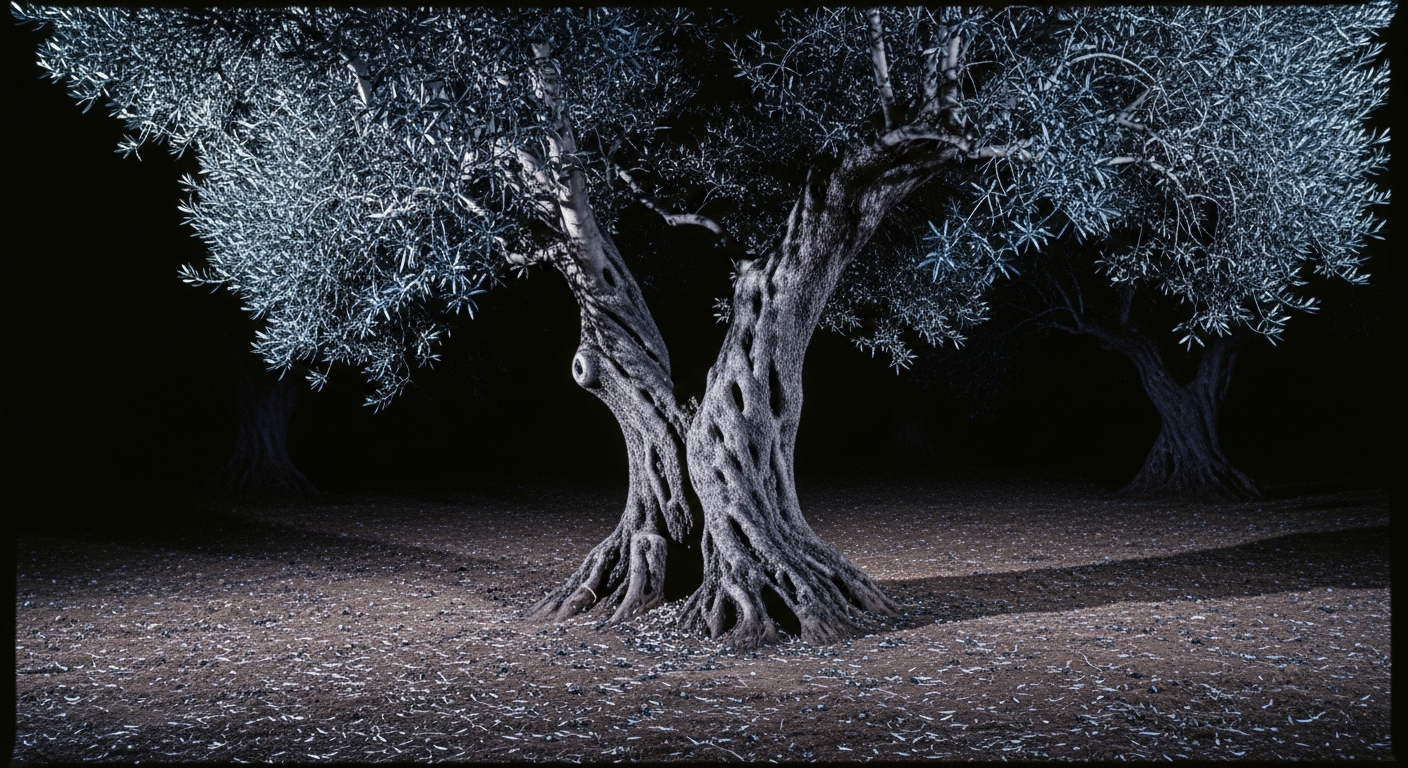
He came out and went, as was his custom, to the Mount of Olives. The disciples followed him. When he reached the place, he said to them, "Pray that you will not fall into temptationContextPray that you will not fall into temptationThis echoes the Lord's Prayer that Jesus taught in 11:4 — "do not lead us into temptation." The same instruction opens and closes the prayer scene (22:40 and 22:46), framing the entire Gethsemane episode. Jesus is modeling the prayer he taught.."
Then he tore himself away from them — about a stone's throw — and knelt downCultureknelt downJewish prayer was normally performed standing, with hands raised. Going to one's knees was a posture of extreme distress, not routine devotion. Ancient listeners would have recognized this as a signal that something was breaking inside Jesus. Luke's Jesus kneels; Matthew's falls on his face. Both communicate crisis through posture. and prayed.
"Father, if you are willing — take this cup away from meLifetake this cup away from meThis prayer dismantles the idea that faith means stoic acceptance. Jesus does not suppress his fear or pretend to want what is coming. He names what he wants — the cup removed — and then surrenders the outcome. The structure is: honest desire first, then trust. Much religious teaching inverts this, counseling believers to skip the honest part and move straight to submission. Gethsemane models something harder and more human: bringing the full truth of what we feel before God, and then releasing control. The prayer is not answered the way Jesus asks. The cup is not removed. But the one who prays it walks into the passion with a composure that holds through arrest, trial, and crucifixion.. Yet not my will — may yours be doneTextmay yours be doneThe Greek verb γινέσθω is in the optative/prayer form — "may it be done" — not the flat declarative "your will be done." This is a prayer, not a statement of resignation. Jesus asks honestly for what he wants (the cup removed), then offers the decision to the Father. The "cup" echoes the cup of the Last Supper (22:20): the cup of blessing has become the cup of suffering.."
[[An angel from heaven appeared to him, strengthening him. In his agony he prayed more intensely, and his sweat fell like drops of blood to the ground.]]
When he rose from prayer and went back to the disciples, he found them sleeping — from griefTextsleeping — from griefLuke alone among the Gospels explains the disciples' sleep as caused by grief (ἀπὸ τῆς λύπης). Mark implies negligence. Luke extends compassion: their bodies shut down from sorrow, not indifference..
"Why are you sleeping?" he said. "Get up and pray — that you will not fall into temptation."
Additional Notes
-
Difficult angel ... sweat like drops of blood expand_more
These verses are placed in double brackets because they are absent from the oldest and most reliable manuscripts, including Papyrus 75 (c. 200 CE), Codex Vaticanus, and Codex Alexandrinus. They are likely a very early addition to Luke's text — present in some manuscripts from the 2nd century onward — but almost certainly not part of what Luke originally wrote. "Agony" (ἀγωνία) comes from the Greek word for an athletic contest — intense, focused struggle, not passive anguish. "Like drops of blood" is a simile (ὡσεί = "as if"), not necessarily a medical description. These verses have profoundly shaped Christian piety and art, but their textual status requires this acknowledgment.