Luke 9-19
The Wicked Tenants
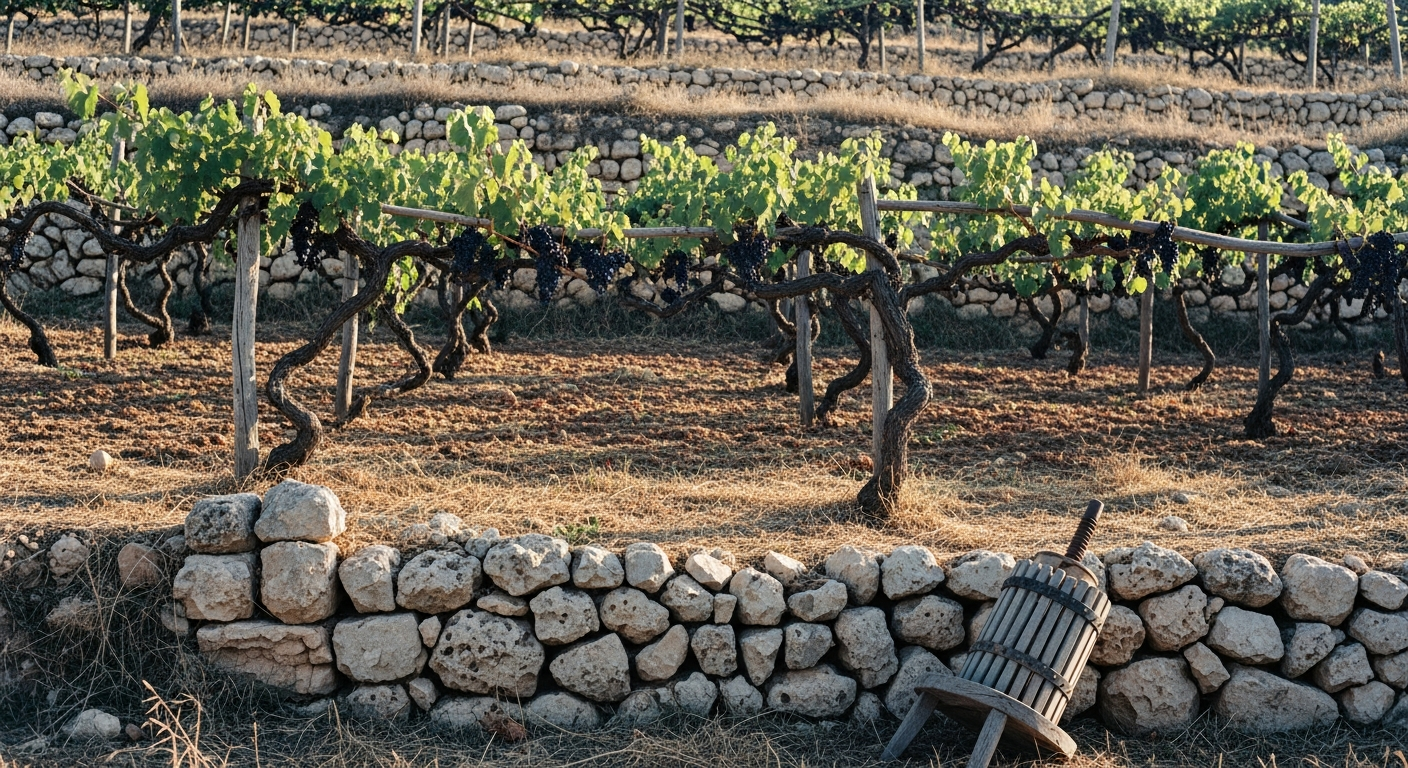
Then he turned from the leaders and spoke directly to the crowd. "A man planted a vineyardContexta vineyardThe moment Jesus says "vineyard," any biblically literate listener hears Isaiah 5:1-7 — the Song of the Vineyard, Israel's most famous judgment poem: "The vineyard of the LORD of hosts is the house of Israel." But Jesus shifts the allegory. In Isaiah, the vineyard itself is unfaithful. In Jesus' parable, the vineyard is not the problem — the tenants are. The critique targets specific stewards of God's trust, not the people as a whole.. He leased it to tenant farmersCulturetenant farmers (γεωργοί)Not a fantasy scenario. Herodian land concentration had created a class of absentee landlords extracting from peasant tenant farmers across Palestine. Rent strikes and violence against owners' agents were real. The parable's economic realism grounds its theological freight: the listeners knew this world. and went abroad for a long time. At harvest, he sent a servant to collect his share.
"They beat the servant. Sent him back with nothing.
"He sent a second servant. They beat him too, shamed him, and sent him back empty-handed.
"A third. They wounded him and threw him out.
"The owner thought, 'What can I do now?' And then: 'I will send the son I loveTextthe son I love (τὸν υἱόν μου τὸν ἀγαπητόν)The word ἀγαπητόν ("beloved") is the same word used at Jesus' baptism: "You are my beloved Son" (Luke 3:22). The christological identification is embedded in the vocabulary. The owner's vulnerable hope — "perhaps they will respect himLifeperhaps they will respect himThe owner knows the track record — three servants beaten, wounded, thrown out. The rational response is force. Instead he sends his son, unarmed, on the strength of a "perhaps." This is not naivety; it is the logic of a love that risks everything on the possibility of a changed response. The same pattern operates in every relationship where someone chooses vulnerability after being hurt — not because they are foolish, but because they refuse to let violence have the last word." — is presented as almost foolishly generous, the extravagance of divine patience extending beyond rational expectation.. Perhaps they will respect him.'
"But the tenants recognized the son. They saw the heir, and they saw their chance. 'If we kill him,' they said, 'the estate becomes ours.' They dragged him outside the vineyard. And killed him.
"So what will the owner of the vineyard do? He will come back. He will destroy those tenants. And he will give the vineyard to othersCulturegive the vineyard to othersCRITICAL: "Others" (ἄλλοις) is deliberately unidentified in Luke's text. It does NOT mean "the Gentiles" or "the church." The vineyard (God's covenant community) is not destroyed — only the unfaithful tenants are replaced. The 2,000-year history of reading this parable as God's rejection of the Jewish people in favor of the Gentile church is a hermeneutical disaster: Luke 20:19 explicitly identifies the parable's targets as the chief priests and scribes — the Jerusalem leadership, not the Jewish people.." The people cried out: "God forbid!TextGod forbid! (Μὴ γένοιτο)The strongest possible rejection in Greek — an idiom characteristic of Paul (Romans 3:4, 6, 31; Galatians 2:17) appearing uniquely here in Gospel narrative. The crowd hears the parable's implication — judgment on them — and recoils with visceral horror. This is not a polite objection. It is a cry of refusal."
He let that sit. Then: "Everyone who falls on that stone will be shattered. And when that stone falls on someone — it will crush them to dust."
The chief priests and the legal scholars wanted to arrest him on the spot. They knew exactly who the parable was about. But they were afraid of the crowd.
Additional Notes
-
Context Psalm 118:22 expand_more
The crowd had just sung this very psalm at Jesus' triumphal entry days earlier (Luke 19:38 quotes Psalm 118:26). Now Jesus turns their own song back on them: the stone the builders rejected — after inspection, after deliberate evaluation — has become the structural foundation of the entire building. The reversal is architectural: from waste to cornerstone.
-
Text shattered ... crushed to dust expand_more
Two distinct fates using two different Greek verbs. The first (συνθλασθήσεται, "shattered") describes stumbling against the stone — resistance that breaks the resistor. The second (λικμήσει, "winnowed/scattered like chaff") draws on Daniel 2:34 — the divine stone that pulverizes the statue of empires. Two degrees of judgment: those who oppose the stone are broken; those whom the stone actively falls upon are annihilated.